The War for Chinese Talent in America:
The Politics of Technology and Knowledge in Sino-U.S. Relations
by David Zweig (Association for Asian Studies)
The book is about the emigration of skilled or educated workers from one country to another, colloquially referred to as ‘brain drain.’1 The book focuses on the movement from China to the U.S., with discussion of other countries.
China has looked on this sort of migration as an economic crisis. It has created programs that focus on Chinese nationals to get them to continue to work in China, work with Chinese scholars, or to get them to come back to China.
The United States sees this as a strategic crisis. The U.S. is worried about espionage and private trade secrets, particularly those with military applications. It has created legal obligations and penalties that a lot of these otherwise lawful residents bear.
Elements of the problem go back a few decades, but get warmer in the late aughts and early ’10s, with the Chinese government starting up much more active policy measures to reward and encourage people coming back, or at least doing some cross-national collaboration. Meanwhile, it becomes a hot issue in the Trump era. Like a lot of things, the Trump administration did not change policy as much as go ‘mask off’ about it, and get aggressive about enforcement. The Biden administration has rolled that back some, but still is hawkish on China in general.
The author thinks that U.S. fears are unfounded. He repeatedly references either McCarthy’s HUAC behaviors or the purges of Maoist China to describe the U.S. actions. And by far here the strongest section is the case studies. In the one seemingly guilty and five seemingly innocent situations, U.S. law enforcement and U.S. university systems look like they are borderline competent. The only real gotcha moments are over financial crimes. The author points out the irony that that U.S. policy is creating the environment that Chinese policy never could: getting educated workers to move back to China to avoid harassment, racism, and character assassination in the U.S..
This book excels as a micro-history of a particular segment of foreign policy and U.S.-China relations. The writing is academic and dry, but the copious charts, graphs, and other visual aids make up all ground lost there. But it does not stick the landing.
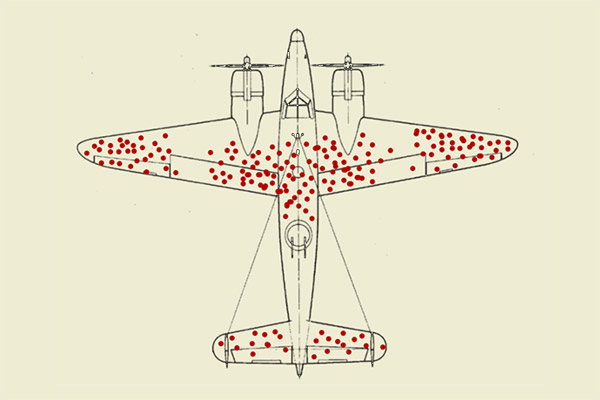
Espionage is like fraud: we know about it when someone does a bad job. The author leans on advances in medical science, not a risk-free topic by any means, but much easier to focus on the “for all mankind” appeal. Technology and engineering gets narrower, more risky.
I am specifically not saying that academics is infested with PRC spies and assets.
Also, I am specifically saying that the author’s position is reasonable. You can look at the theatrical bumbling of the FBI2, which would be comic if not so tyrannical, and say ‘this is security theater, and not worth it.’ The sort of ‘you can beat the rap but not the ride’ methodology where the cruelty is the point, that enables the cowardly administrator is bad. You can base that on what facts we know.
But in the context of what amount to dueling racially-charged policies of two nations,3 each with their own internal politics and with a whole environment of other strategic, economic, and political concerns to address, I do not think that it gives the matter a fair shake without, say, investigating those concerns from that perspective.
Rephrased, the individual chapters of the book are high grade, with lots of interesting and well-sourced material. I just do not know if they all fit together like the author thinks that they do.
My thanks to the author, David Zweig, for writing the book, and for the publisher, Association for Asian Studies, for making the ARC available to me.
- Wikipedia uses the term ‘Human Capital Flight,’ but this is an instance of an ameliorative being more pejorative than the term it is meant to replace. ↩︎
- The cliche ‘bull in a china shop’ is there. ↩︎
- So, things get fuzzy as to the proper words here, but as much as the U.S. policy seems to use and encourage naked racism about distrusting everyone from China, the Chinese policy, and historically why it worked, also has a nationalistic or even ethnic character. Racist is the wrong term. But I am not sure what is. I think that the point is to say that the sort of motivations for cross-country research and those for spying are a pretty tight Venn diagram, and everyone seems to act as if they are aware of that. ↩︎
 CITATION HEEDED